

Facebook Ad Libraries: Complete Guide for 2026
 XSPY.CLOUD
Facebook ad libraries have become essential tools for marketers, researchers, and compliance professionals seeking transparency in digital advertising. These repositories provide unprecedented access to active and historical advertisements across Meta's platforms, enabling users to analyze competitor strategies, track political messaging, and understand advertising trends. Whether you're running campaigns in gambling, nutra, e-commerce, or any other vertical, understanding how to leverage facebook ad libraries effectively can transform your competitive intelligence capabilities and campaign performance.
Understanding Facebook Ad Libraries and Their Purpose
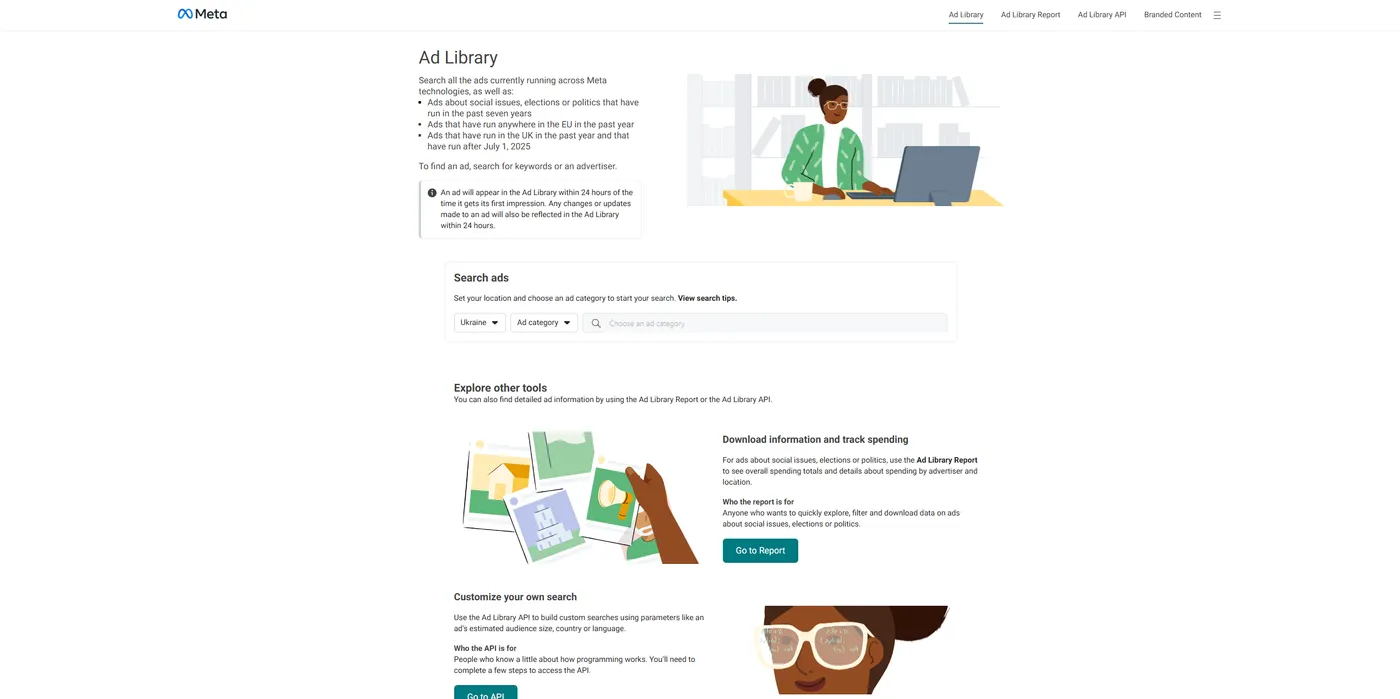
The Meta Ad Library serves as a comprehensive public database where anyone can search for advertisements running across Facebook, Instagram, Messenger, and Audience Network. Meta introduced this transparency initiative in response to regulatory pressure and public demand for accountability in digital advertising, particularly concerning political campaigns and social issues.
This repository contains detailed information about each advertisement, including creative assets, ad copy, targeting parameters (for certain categories), and spending estimates. The database updates continuously, reflecting the dynamic nature of digital advertising where campaigns launch and pause throughout each day.
Key Components of Ad Library Data
Every entry in facebook ad libraries includes several critical data points that marketers can analyze:
Creative assets: Images, videos, carousel elements, and text overlays
Ad copy: Primary text, headlines, descriptions, and call-to-action buttons
Running status: Active, inactive, or scheduled campaigns
Start dates: When advertisements first appeared on Meta platforms
Spending ranges: Budget estimates for political and social issue ads
Impressions: Reach data for ads about social issues, elections, or politics
Targeting demographics: Age, gender, and location data for regulated categories
The transparency varies significantly based on advertisement categories. Political ads and those concerning social issues face stricter disclosure requirements, while commercial advertisements receive more limited transparency treatment.
Advanced Search Techniques for Competitive Research
Mastering search functionality within facebook ad libraries requires understanding both basic and advanced filtering options. The standard search interface allows queries by advertiser name, but sophisticated researchers employ multiple techniques to uncover hidden opportunities.
Strategic Search Methods
Advertiser Name Variations: Companies often run ads under multiple business names, subsidiaries, or regional entities. Searching for partial matches and common misspellings reveals the complete advertising footprint of competitive organizations.
Category Filtering: The platform categorizes ads into commercial, political, housing, employment, and credit opportunity categories. Each category provides different levels of transparency and data access.
Geographic Targeting Analysis: For advertisers running campaigns across multiple countries, the location filter reveals regional strategy variations and market prioritization.
Search Parameter
Use Case
Data Revealed
Advertiser Name
Find specific brands
All active campaigns
Keywords
Discover industry trends
Related advertisers
Location
Regional analysis
Geographic targeting
Platform
Channel strategy
Facebook vs Instagram
Active Status
Current campaigns
Live advertisements
The platform's limitations become apparent when searching for creative concepts rather than specific advertisers. Unlike specialized tools, the native interface doesn't support reverse image search or video content analysis.
Extracting Competitive Intelligence from Ad Data
Professional marketers transform raw ad library data into actionable competitive intelligence through systematic analysis processes. This methodology goes far beyond simply viewing competitor advertisements.
Analyzing Creative Patterns
Successful campaigns often share recognizable patterns in visual composition, messaging frameworks, and offer structures. By examining multiple advertisements from top performers in your niche, you identify these recurring elements.
Visual Analysis Framework:
Color psychology: Dominant color schemes and their emotional associations
Composition style: Product-focused versus lifestyle imagery
Text overlay density: Minimal text versus information-rich designs
Human elements: Presence of faces, expressions, and social proof
Branding prominence: Logo placement and brand visibility strategies
The gambling and nutra verticals particularly benefit from creative analysis within facebook ad libraries, as regulatory constraints create distinctive advertising styles. These industries often employ indirect messaging, testimonial-style content, and benefit-focused rather than product-focused creative approaches.
Messaging Architecture Breakdown
Beyond visual elements, the textual components of advertisements reveal strategic positioning and audience psychology understanding. Effective analysis categorizes messaging across several dimensions:
Pain points addressed: Problems the advertiser identifies in target audiences
Solution framing: How products or services solve identified problems
Urgency mechanisms: Scarcity, limited-time offers, or seasonal triggers
Social proof types: Reviews, testimonials, certifications, or popularity claims
Call-to-action intensity: Soft invitations versus aggressive conversion pushes
Tools like AdDecode's Facebook Ad Library guide provide frameworks for systematically categorizing and analyzing these messaging elements across large advertisement datasets.
Limitations and Challenges of Native Ad Libraries
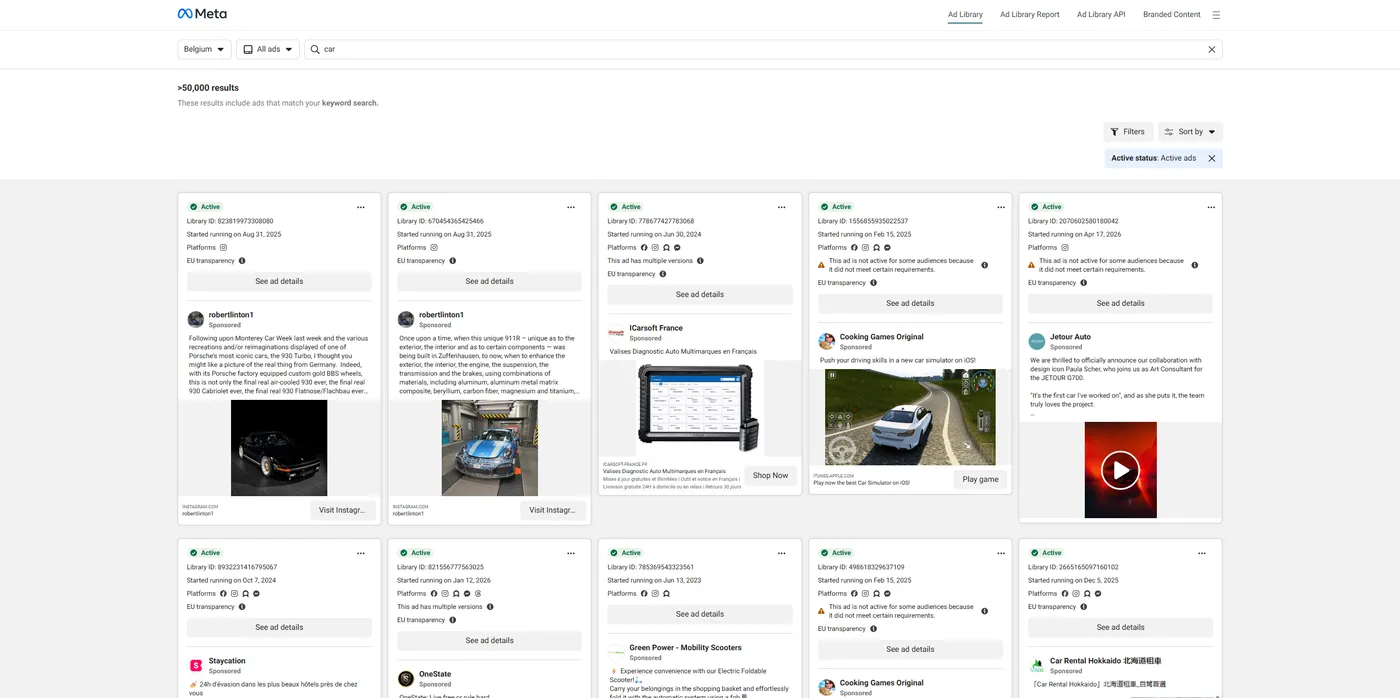
While facebook ad libraries provide valuable transparency, they present significant limitations for professional marketers conducting comprehensive competitive research. Understanding these constraints helps set realistic expectations and identifies where specialized tools add value.
Data Completeness Issues
The native platform doesn't archive every advertisement indefinitely. Ads disappear from the library after they stop running, with varying retention periods based on category. This ephemeral nature makes longitudinal analysis challenging without external archiving systems.
Performance metrics remain largely hidden for commercial advertisements. While political ads display impression ranges and spending estimates, e-commerce, gambling, and nutra campaigns show no performance indicators. Marketers must infer success through campaign longevity and variation testing patterns.
Search and Discovery Limitations
Finding relevant advertisements without knowing specific advertiser names requires time-consuming manual exploration. The platform offers no recommendations, trending lists, or algorithmic discovery features that would surface high-performing content in specific niches.
Limitation
Impact
Workaround
No performance metrics
Cannot verify ad success
Track campaign duration
Limited historical data
Incomplete trend analysis
External archiving tools
Basic search only
Difficult content discovery
Systematic competitor lists
No bulk export
Manual data collection
Third-party platforms
Delayed updates
Miss short campaigns
Frequent monitoring
The interface design prioritizes transparency over research efficiency, requiring multiple clicks to view complete campaign details and creative variations.
Specialized Tools and Platforms for Enhanced Analysis
Professional advertisers and agencies increasingly supplement native facebook ad libraries with specialized intelligence platforms that address core limitations. These tools provide enhanced search capabilities, performance estimation, and bulk analysis features.
Platforms designed specifically for advertising intelligence aggregate data from facebook ad libraries while adding proprietary analytics, categorization systems, and discovery algorithms. For marketers focused on specific verticals like gambling or nutra, niche-specific tools offer pre-filtered datasets and category expertise.
Advanced Platform Capabilities
AI-powered search enables content-based discovery, allowing users to find advertisements similar to reference examples without knowing advertiser names. This functionality proves particularly valuable when researching creative concepts rather than specific competitors.
Performance indicators derived from engagement patterns, campaign duration, and variation testing provide proxy metrics for advertisement success. While not as precise as actual conversion data, these signals help identify likely high performers worth further analysis.
Team collaboration features support research workflows in agencies and larger marketing departments, enabling shared collections, annotation systems, and coordinated competitive monitoring.
For businesses operating in competitive niches where creative advantage determines profitability, investing in specialized platforms that analyze millions of advertisements daily provides significant strategic value compared to manual research through native interfaces.
Privacy, Ethics, and Regulatory Considerations
The existence of facebook ad libraries reflects broader societal debates about advertising transparency, data privacy, and platform accountability. Understanding this context helps marketers navigate ethical considerations in competitive research.
Transparency Requirements Evolution
Meta's ad transparency initiatives emerged from specific historical contexts, including interference in electoral processes and discriminatory advertising practices. Research documented in studies like the analysis of Russia-linked ad campaigns demonstrated how microtargeting capabilities could be exploited for divisive messaging.
Subsequently, platforms implemented disclosure requirements for political advertisers, including identity verification, "Paid for by" disclaimers, and extended data retention. Studies such as the examination of Dutch political ads show how these transparency measures enable public scrutiny of campaign messaging and spending patterns.
Discrimination concerns extend beyond political advertising. Research investigating job advertiser practices on Facebook highlights how seemingly neutral creative choices can perpetuate discriminatory outcomes, emphasizing why transparency matters across all advertising categories.
Responsible Research Practices
While facebook ad libraries make advertising data publicly accessible, ethical researchers should consider several principles:
Respect competitor intellectual property: Analyze strategies without directly copying creative assets
Understand regulatory context: Different industries face varying advertising restrictions
Maintain user privacy: Avoid identifying individual users when analyzing targeting strategies
Consider societal impact: Recognize how advertising shapes public discourse and behavior
The relationship between transparency and accountability, explored in studies on political ad sentiment and dark money, demonstrates that access to advertising data enables oversight but doesn't automatically ensure responsible practices.

Practical Applications Across Industries
Different industries extract distinct value from facebook ad libraries based on their unique competitive dynamics, regulatory environments, and creative requirements.
E-commerce and Direct-to-Consumer Brands
Online retailers use ad library research to track seasonal campaign timing, identify emerging product categories, and analyze promotional strategies. The ability to see exactly which products competitors advertise during specific periods informs inventory planning and marketing calendar development.
Offer structure analysis reveals pricing strategies, bundle configurations, and discount depth patterns. When multiple competitors converge on similar promotional approaches, it often signals tested, effective strategies worth considering.
Gambling and Gaming Verticals
Highly regulated industries like gambling face unique creative constraints that make competitive intelligence particularly valuable. Advertisers must communicate entertainment value while complying with strict regulatory requirements that vary by jurisdiction.
Successful gambling advertisers often develop sophisticated indirect messaging strategies that facebook ad libraries reveal through pattern analysis. Understanding these approved approaches helps new entrants navigate regulatory complexity while maintaining competitive creative quality.
Nutra and Health Products
The nutra vertical combines aggressive direct-response marketing with regulatory compliance challenges around health claims and testimonial usage. Ad library research helps identify which messaging frameworks, visual styles, and offer structures perform well while remaining compliant.
For marketers exploring this space, resources like guides on finding nutra creatives for arbitrage provide vertical-specific research methodologies that complement general ad library techniques.
Building Systematic Monitoring Workflows
Occasional ad library searches provide limited value compared to systematic competitive monitoring workflows that track changes over time and identify emerging trends early.
Establishing Monitoring Systems
Competitor identification forms the foundation of effective monitoring. Rather than tracking individual brands, successful systems organize competitors into tiers based on market position, advertising sophistication, and strategic relevance.
Tier 1: Direct competitors with similar products, pricing, and target audiences
Tier 2: Adjacent competitors serving related needs or customer segments
Tier 3: Aspirational brands demonstrating advanced marketing sophistication
Tier 4: New entrants and emerging challengers to watch
Monitoring frequency should align with industry dynamics and campaign velocity. Fast-moving verticals like e-commerce require daily checks during peak seasons, while more stable industries support weekly or biweekly monitoring schedules.
Documentation and Analysis Protocols
Activity
Frequency
Key Metrics
Competitor scan
Daily/Weekly
New campaigns launched
Creative archiving
Per discovery
Asset collection
Pattern analysis
Weekly
Emerging trends
Strategic review
Monthly
Competitive positioning shifts
Report generation
Monthly/Quarterly
Insights documentation
Structured documentation transforms raw observations into institutional knowledge that informs strategy development. Screen capture tools, spreadsheet systems, and specialized platforms all support different workflow needs and team sizes.
Integration with Broader Marketing Intelligence
Facebook ad libraries represent one component within comprehensive marketing intelligence ecosystems that incorporate multiple data sources and analytical perspectives.
Multi-Platform Competitive Analysis
While Facebook and Instagram remain dominant advertising channels, complete competitive understanding requires monitoring across platforms. Combining facebook ad libraries data with Google Ads transparency tools, TikTok creative intelligence, and organic social media monitoring provides holistic competitive visibility.
Cross-platform pattern recognition identifies which creative concepts, messaging frameworks, and offer structures perform consistently across channels versus those optimized for specific platform audiences and formats.
Attribution and Performance Validation
External competitive intelligence helps contextualize internal campaign performance. When your campaigns underperform despite strong creative execution, ad library research might reveal that competitors have saturated the market or that audience preferences have shifted toward new messaging approaches.
Resources like Conversion Studio's Facebook Ad Library guide explain methodologies for connecting external competitive research with internal performance analytics to generate actionable insights.
Technical Considerations and API Access
For organizations requiring programmatic access to advertising data at scale, understanding technical access options and limitations becomes essential.
API Capabilities and Restrictions
Meta provides API access to ad library data, enabling automated data collection and integration with internal analytics systems. However, significant restrictions apply that limit practical utility for many use cases.
Rate limiting constrains the volume and frequency of API requests, making comprehensive data collection time-consuming. Organizations must carefully architect data collection strategies to work within these constraints while gathering necessary intelligence.
Data fields available through the API differ from those visible in the web interface, with some information types accessible only through manual browsing. This creates challenges for organizations preferring fully automated workflows.
Video tutorials like the Facebook Ad Library research guide demonstrate practical research techniques using the standard web interface, which often proves more accessible for smaller teams than API integration projects.
For detailed technical specifications and access procedures, the AdMapix complete guide provides comprehensive documentation of both web interface and API capabilities.
Future Trends in Advertising Transparency
The landscape of facebook ad libraries and advertising transparency continues evolving in response to regulatory developments, platform policy changes, and technological capabilities.
Regulatory Expansion
Governments worldwide increasingly mandate advertising transparency beyond political campaigns. The European Union's Digital Services Act and similar regulations in other jurisdictions expand disclosure requirements to commercial advertising, particularly in sensitive categories.
Verification requirements for advertisers continue tightening, with platforms implementing more rigorous identity confirmation processes and disclosure standards. These changes affect both what information appears in ad libraries and who can advertise in regulated categories.
AI and Automation Impact
Artificial intelligence technologies transform both advertising creation and competitive research methodologies. AI-powered creative generation enables rapid variation testing at unprecedented scale, while AI-enhanced research tools automatically identify patterns and opportunities within massive advertising datasets.
The tension between automated creative production and meaningful competitive differentiation will shape advertising strategies throughout 2026 and beyond, with successful marketers balancing efficiency gains against the need for distinctive brand messaging.
Mastering facebook ad libraries requires understanding both native platform capabilities and complementary research tools that address core limitations. By implementing systematic monitoring workflows and integrating advertising intelligence into broader strategic processes, marketers gain sustainable competitive advantages in increasingly crowded digital channels. XSPY.CLOUD empowers advertisers in gambling, nutra, and e-commerce with advanced creative analysis across over 10 million advertisements, AI-powered recommendations, and team collaboration features that transform competitive research from manual investigation into strategic advantage. Start discovering top-performing creatives and accelerating your campaign development today.